
The cladding bill introduced on 14 October 2026 puts building safety back in the news. For UK subbies, the useful next step is a clear review of the job you are pricing. A policy announcement does not settle your scope, payment terms or design duties.
What the cladding bill proposes
The Government introduced the Remediation of Unsafe Cladding Bill to Parliament. Its announcement describes proposed duties to identify, assess and fix unsafe buildings. It also outlines stronger enforcement, a route for third parties to step in and changes to recovering costs from manufacturers.
These are proposals. Introduction of a bill is not the same as Royal Assent or commencement. Therefore, check the law and guidance that apply to your project before treating a proposed measure as a current duty.
Read the Government announcement published on 14 October 2026 for the source of this news.
Start with the work you have priced
First, ask for the current scope, drawings and survey information. State which areas and materials your price covers. Then list any assumptions about hidden conditions. A short exclusion is useful only when the buyer can see what it means.
Next, check access and the work sequence. Who provides the scaffold, lifting, storage and protection? Who arranges access to occupied areas? Record the answer beside the price, rather than leaving the site team to solve the gap later.
Keep design and evidence clear
Agree who designs each part of the work and who reviews the details. Do not assume that a product name settles the full system or its interfaces. Raise unclear points before you accept the order.
Also, agree the records the job needs. These may include product details, delivery records, dated photographs and inspection records. Keep each record tied to a work area and drawing revision. However, commercial records do not replace competent design, safety checks or required approvals.
Use the cladding bill news to review the order
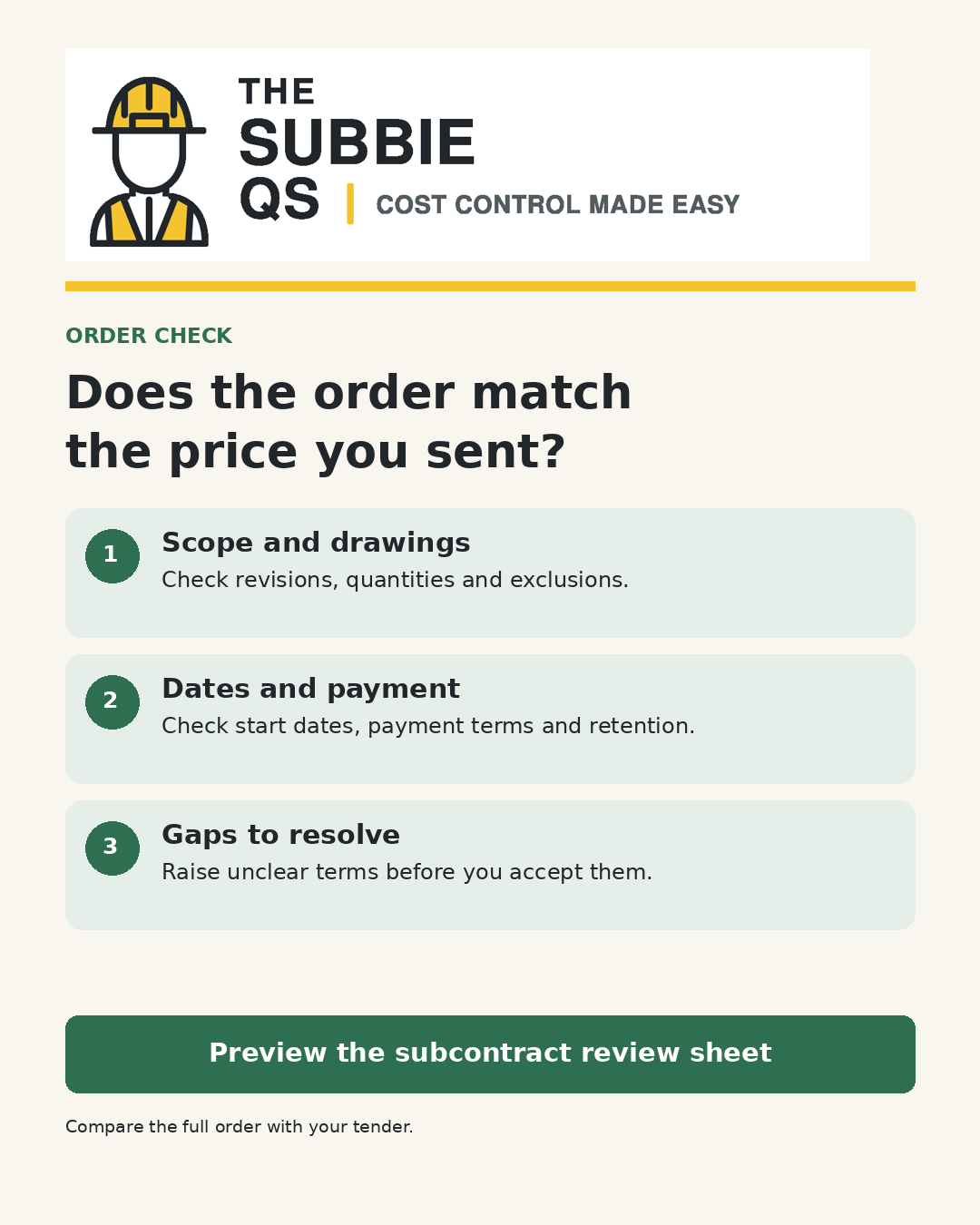
Finally, compare the subcontract order with your tender. Check dates, scope, design terms, payment, retention and the process for changes. Give each open point a name and a next step. That helps the office and site team work from the same basis.
Use our free subcontract review checklist to organise the review. For help with the actual wording, see our contract review and notice support.
Next step: put the unanswered scope and access questions on one list before you send the next remediation price. This is general commercial guidance. Take project-specific legal and technical advice where needed.